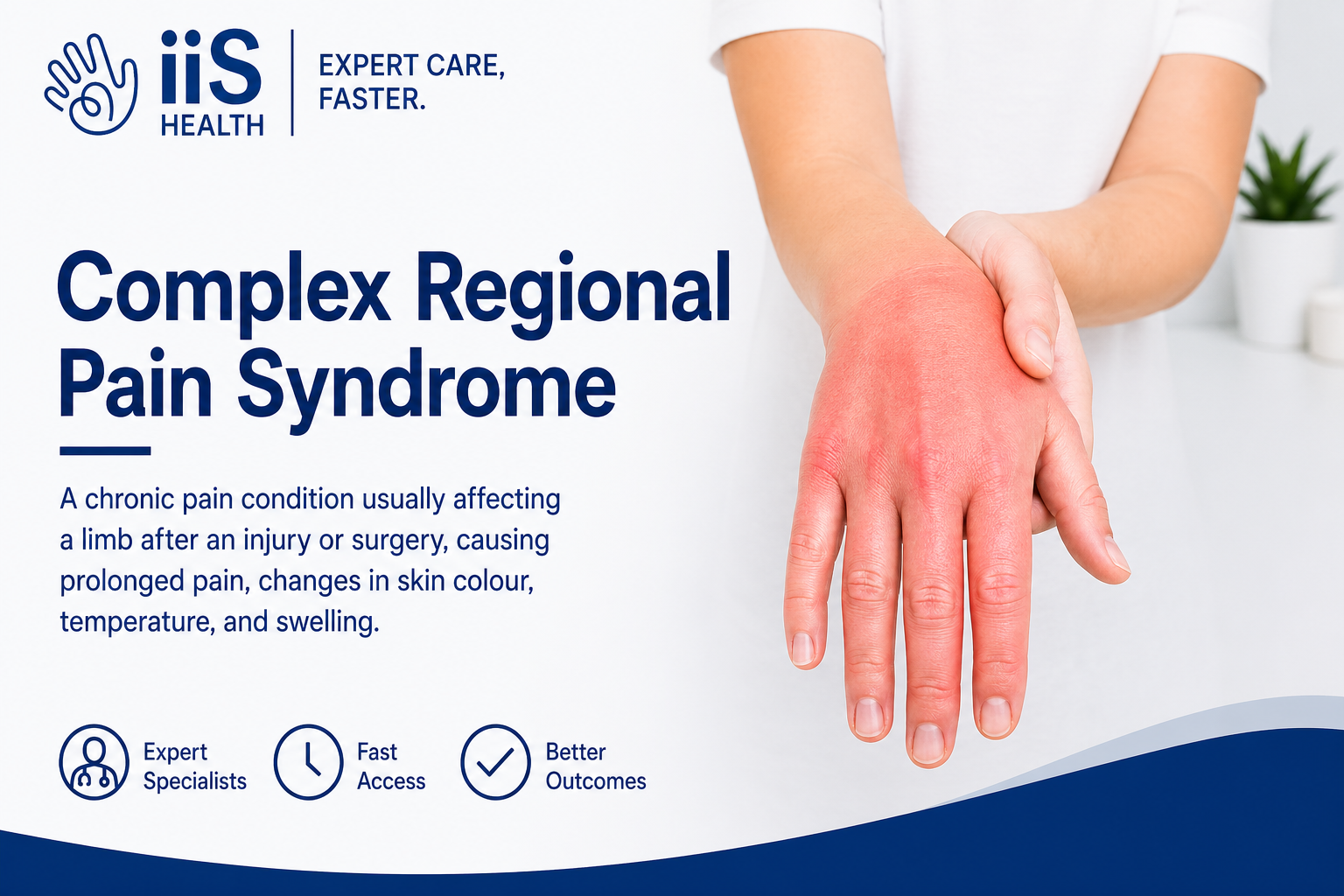
Complex Regional Pain Syndrome (CRPS) is a condition that can develop following injury or surgery to a limb, where the nerves demonstrate an exaggerated response.
This results in pain, swelling, and sensitivity that is often more severe and prolonged than would normally be expected. In some cases, the affected limb may also become stiff over time.
CRPS has previously been known by several names, including Reflex Sympathetic Dystrophy, Sudeck’s Atrophy, and Shoulder-hand syndrome. The term Complex Regional Pain Syndrome has been used since 1991.
There are two types of CRPS:
• Type 1 – occurring after injury or surgery without direct nerve damage
• Type 2 – occurring following injury to a specific nerve
The exact cause of CRPS is not fully understood. It often develops following an injury, which may sometimes be relatively minor.
Two main theories exist:
• Abnormal nerve stimulation within the affected limb
• Abnormal signals originating from the brain affecting nerve function
CRPS is more commonly seen in:
• Women
• Individuals over the age of 30
• Patients following wrist fractures, particularly those requiring manipulation and immobilisation in plaster
Symptoms can vary in severity and distribution but commonly include:
• Pain that is disproportionate to the original injury
• Pain extending beyond the site of injury or surgery
• Swelling in the affected limb
• Changes in skin colour or temperature compared to the opposite side
• Increased sensitivity to touch
• Stiffness and reduced movement
Over time, stiffness can become more pronounced and may affect function.
There is no single test that can confirm CRPS.
Diagnosis is made based on clinical features and examination.
An X-ray may sometimes be performed, as CRPS can lead to thinning of the bones (osteopenia) in the affected limb.
There is no cure for CRPS. Treatment focuses on managing symptoms and improving function.
Early recognition and treatment are essential and improve the likelihood of a better outcome.
Treatment approaches include:
• Hand therapy and physiotherapy (mainstay of treatment)
• Pain-relieving medication
• Desensitisation techniques
• Activity modification
Additional options in selected cases:
• Injections targeting nerve-related pain
• Specialist pain management input
• Surgery (limited role, usually for nerve repair or joint stiffness in specific cases)
Preventative measures are also important, including:
• Avoiding overly tight casts
• Early mobilisation of unaffected joints
• Vitamin C supplementation following wrist fractures (up to 6 weeks), which may reduce risk
Surgery does not play a primary role in the treatment of CRPS.
In selected cases, procedures may be considered to address specific problems, such as:
• Repair of an injured nerve
• Manipulation of stiff joints
The main focus of treatment remains non-surgical and centred around rehabilitation and symptom management.
Recovery from CRPS can be prolonged and varies between individuals.
• Early treatment improves outcomes
• Symptoms may take several months to improve
• Ongoing therapy is often required to maintain movement and function
Rehabilitation focuses on:
• Maintaining mobility
• Reducing pain and sensitivity
• Gradual return to normal activity
CRPS itself is considered a complication of injury or surgery.
Long-term effects may include:
• Persistent pain
• Stiffness and reduced movement
• Sensitivity in the affected limb
• Functional limitation
While many patients improve over time, some may experience lasting symptoms.
You should seek medical advice if:
• Pain is significantly worse than expected following injury or surgery
• Swelling and sensitivity persist or worsen
• You notice changes in skin colour or temperature
• Movement becomes increasingly restricted
Early diagnosis and treatment are key to improving outcomes.




.png)