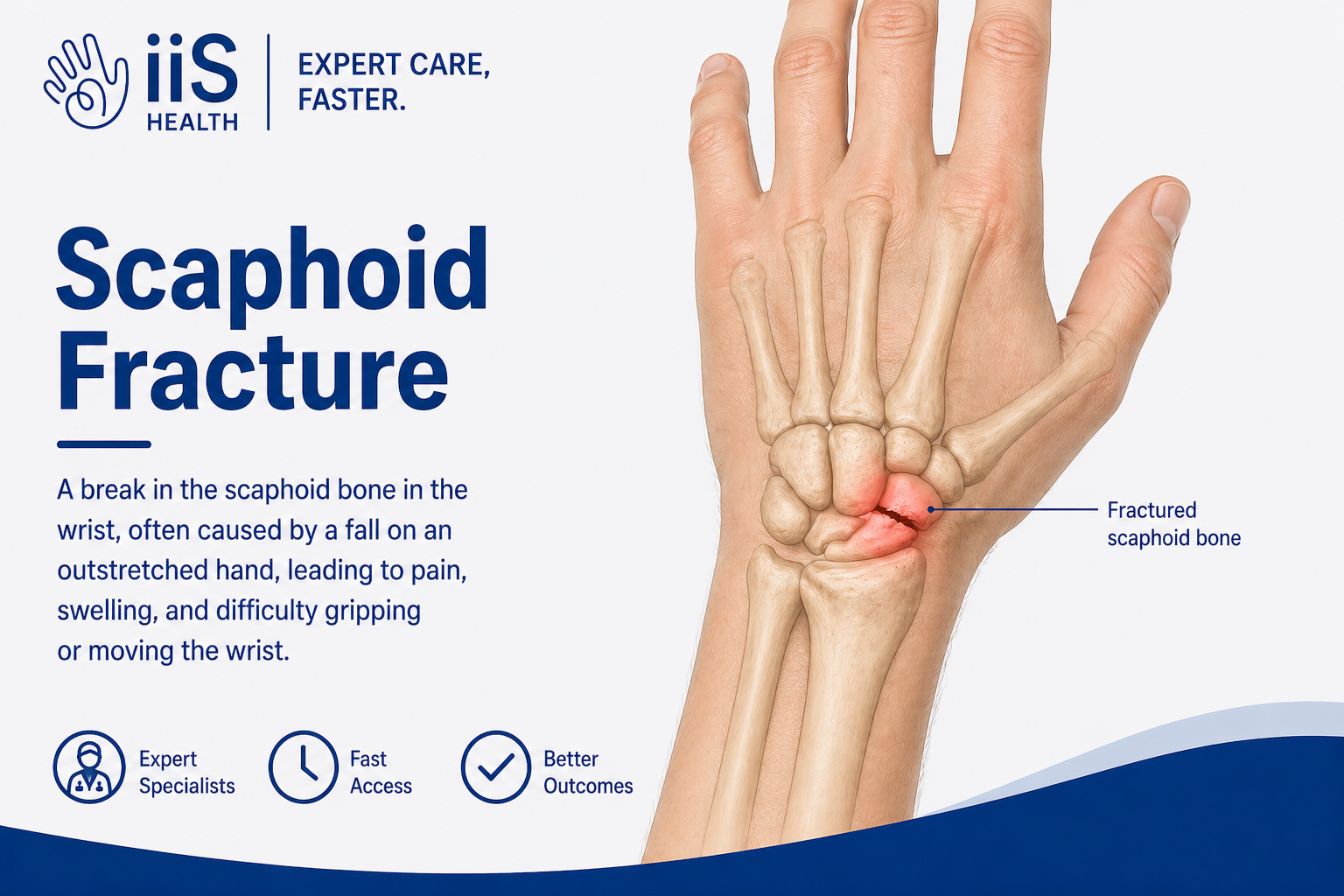
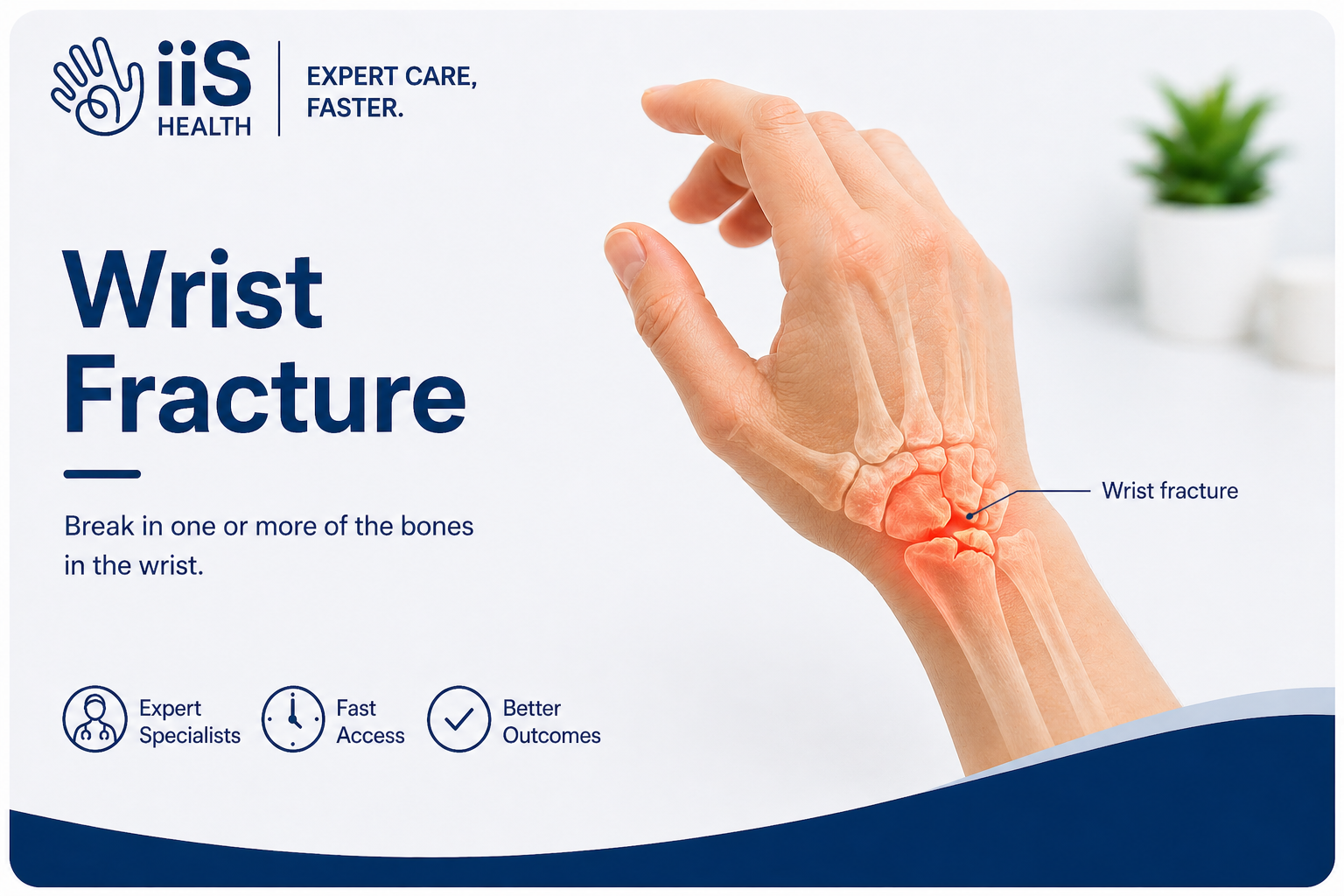
A scaphoid nonunion occurs when a fracture of the scaphoid bone in the wrist fails to heal properly.
The scaphoid is a small bone on the thumb side of the wrist that plays an important role in wrist movement and stability. Because of its limited blood supply, fractures of this bone can sometimes heal slowly or not at all.
In some cases, the initial injury may have been missed or thought to be a simple sprain. Over time, an unhealed fracture can lead to ongoing pain, weakness and stiffness in the wrist.
If left untreated, a scaphoid nonunion can lead to progressive wear in the wrist joint (arthritis), affecting long-term function.
Scaphoid nonunion develops when a scaphoid fracture does not heal.
Possible reasons include:
These factors can prevent the bone from healing properly over time.
Symptoms may include:
Symptoms are often subtle and may develop gradually after an initial injury.
Diagnosis is based on a combination of clinical assessment and imaging.
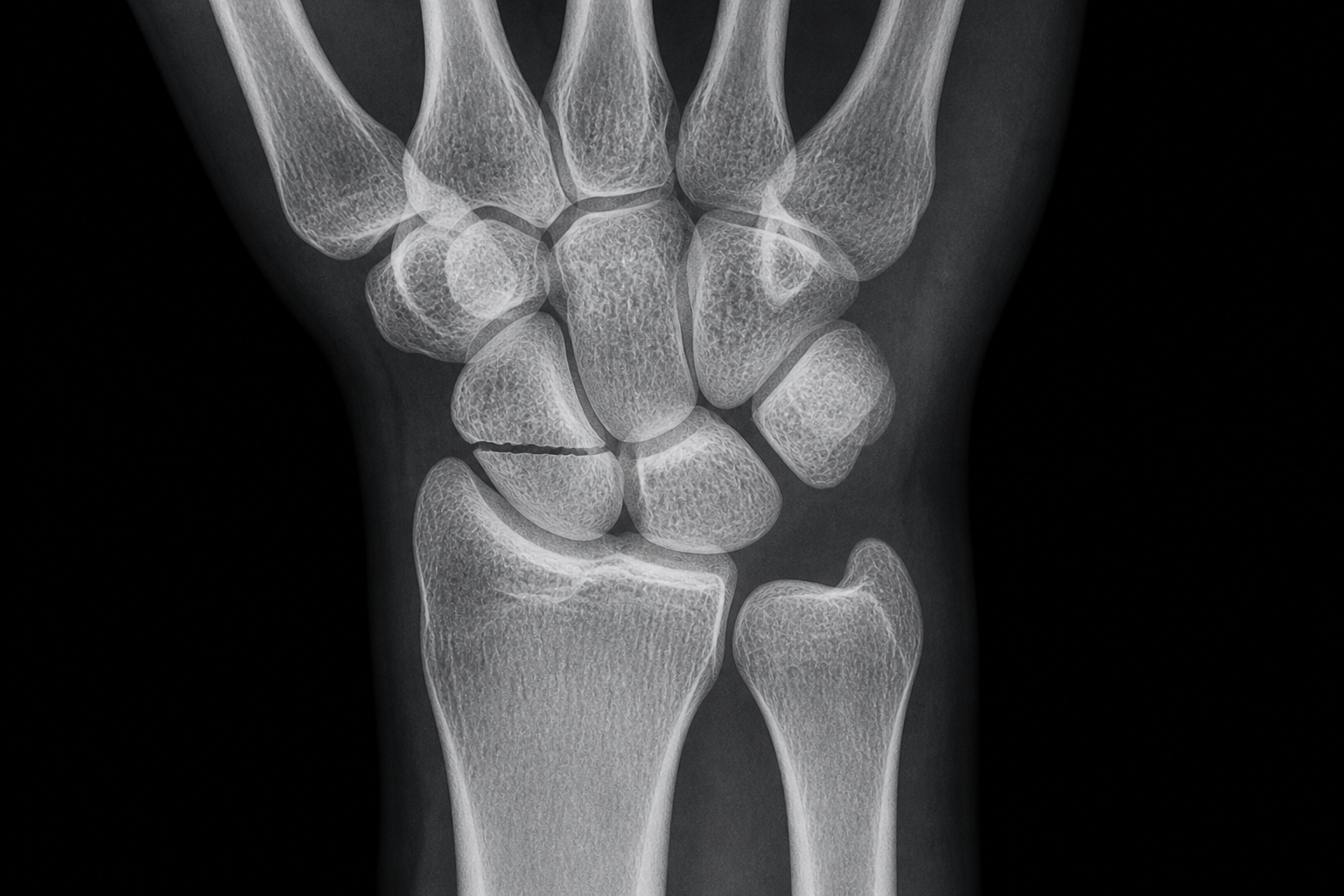
X-rays are usually the first step but may not always clearly show the extent of the problem.
CT scans are often used to assess the fracture in more detail, including alignment and healing potential. MRI scans may be used to evaluate the blood supply to the bone.
These investigations help guide treatment planning.
Treatment depends on the type of nonunion, the position of the fracture, and the condition of the surrounding bone.
Non-surgical treatment is rarely effective once a nonunion has developed.
Surgical treatment is often recommended and may involve:
The aim of treatment is to achieve healing of the fracture, relieve pain, and preserve long-term wrist function.
Surgical treatment typically involves stabilising the fracture and encouraging the bone to heal.
This may include inserting a screw across the fracture and using a bone graft to promote healing, particularly if there is a gap or poor blood supply.
In some cases, more advanced techniques may be used to restore the shape and alignment of the bone.
The procedure is usually performed as a day-case or short stay operation.
Following surgery, the wrist is usually supported in a splint or cast for a period of time.
Recovery typically involves:
Healing can take several months, and follow-up imaging is often required to confirm that the bone has healed.
Early and appropriate treatment improves the chances of a successful outcome and helps reduce the risk of long-term complications.
As with any surgical procedure, there are potential risks, although these are uncommon.
Possible complications include:
Very rarely, a condition known as complex regional pain syndrome (CRPS) can occur, leading to prolonged pain and sensitivity.
You should seek medical advice if you have ongoing wrist pain following an injury, particularly if symptoms have not settled after a few weeks.
Early assessment is important, as untreated scaphoid nonunion can lead to long-term joint damage and arthritis.




.png)