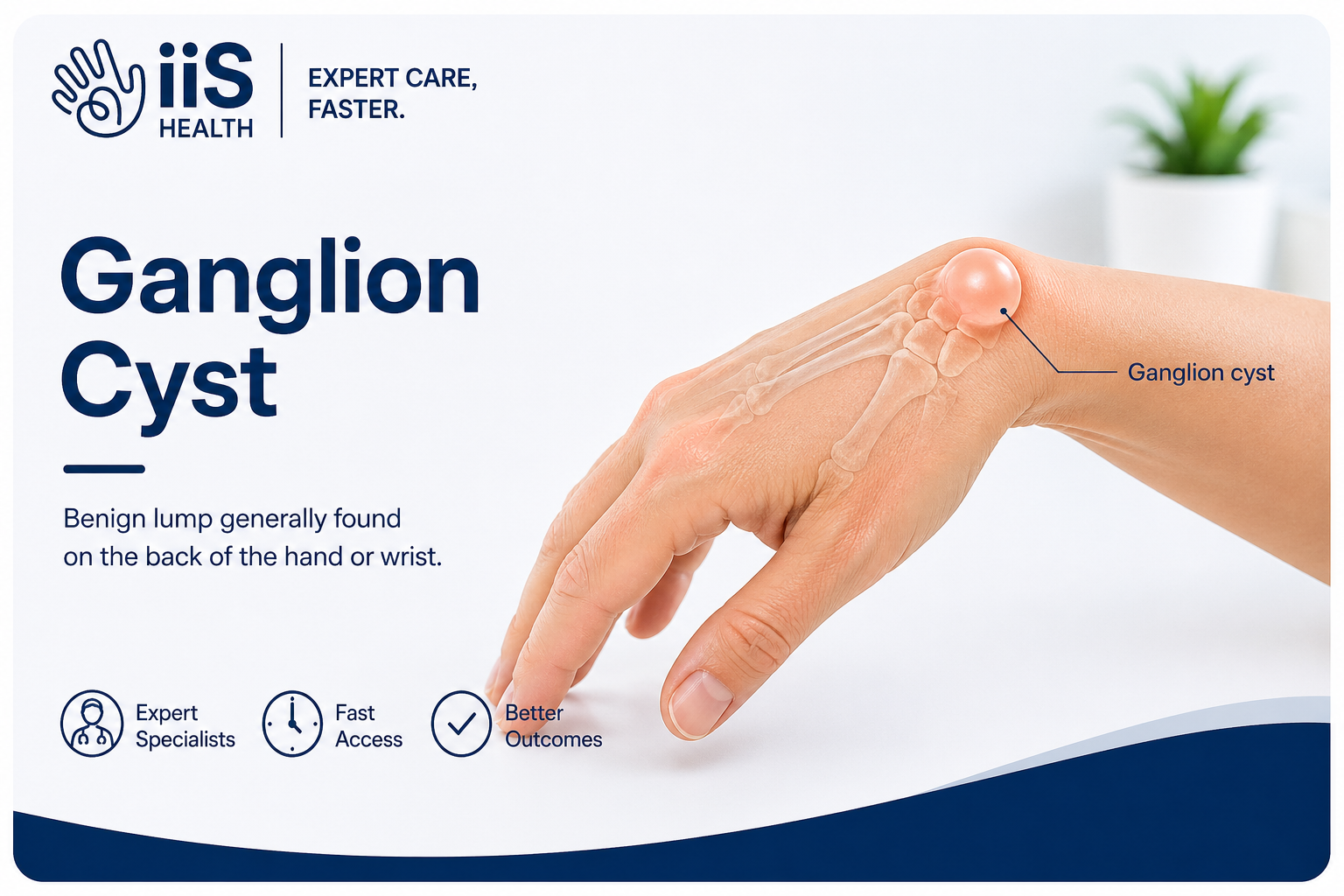
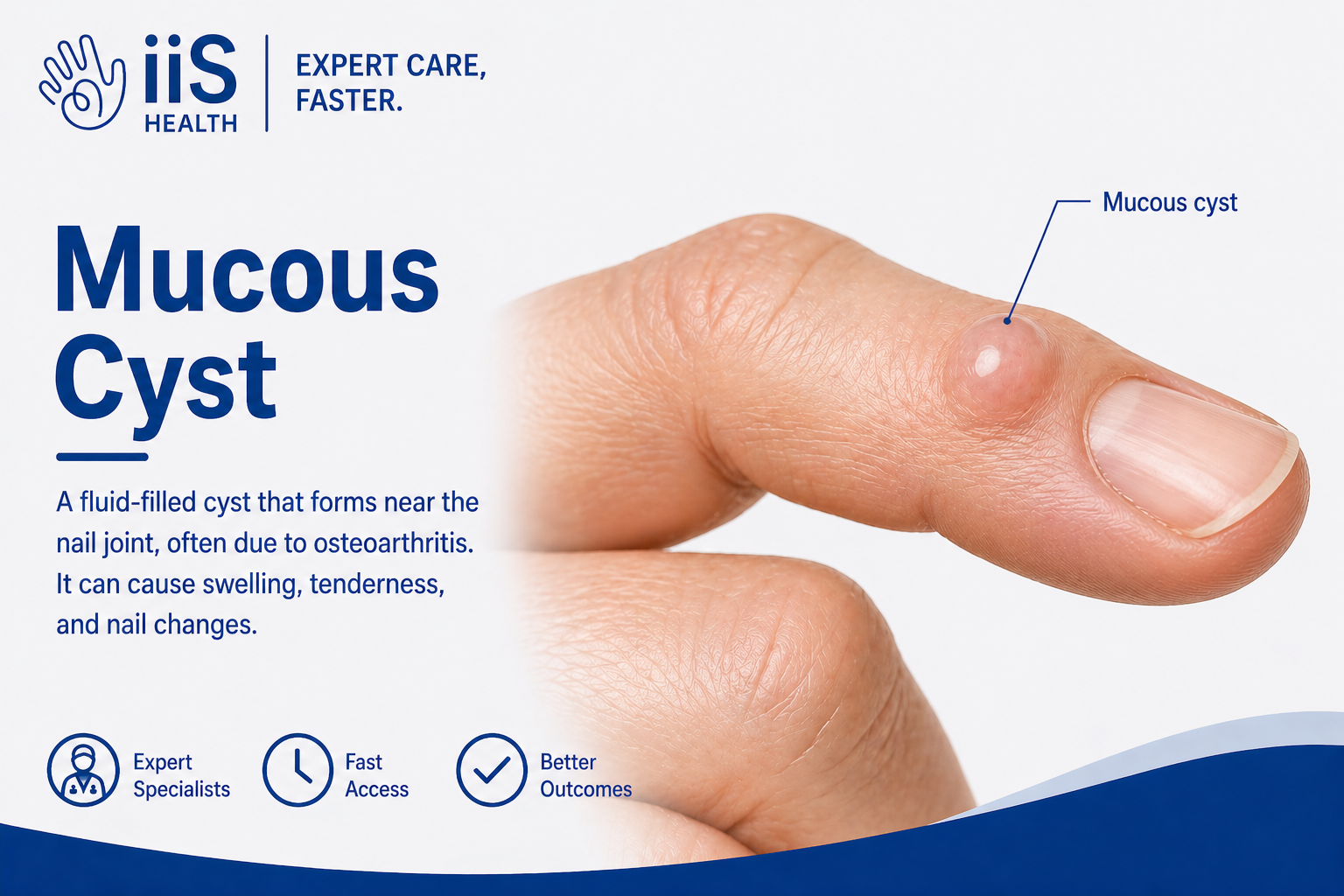
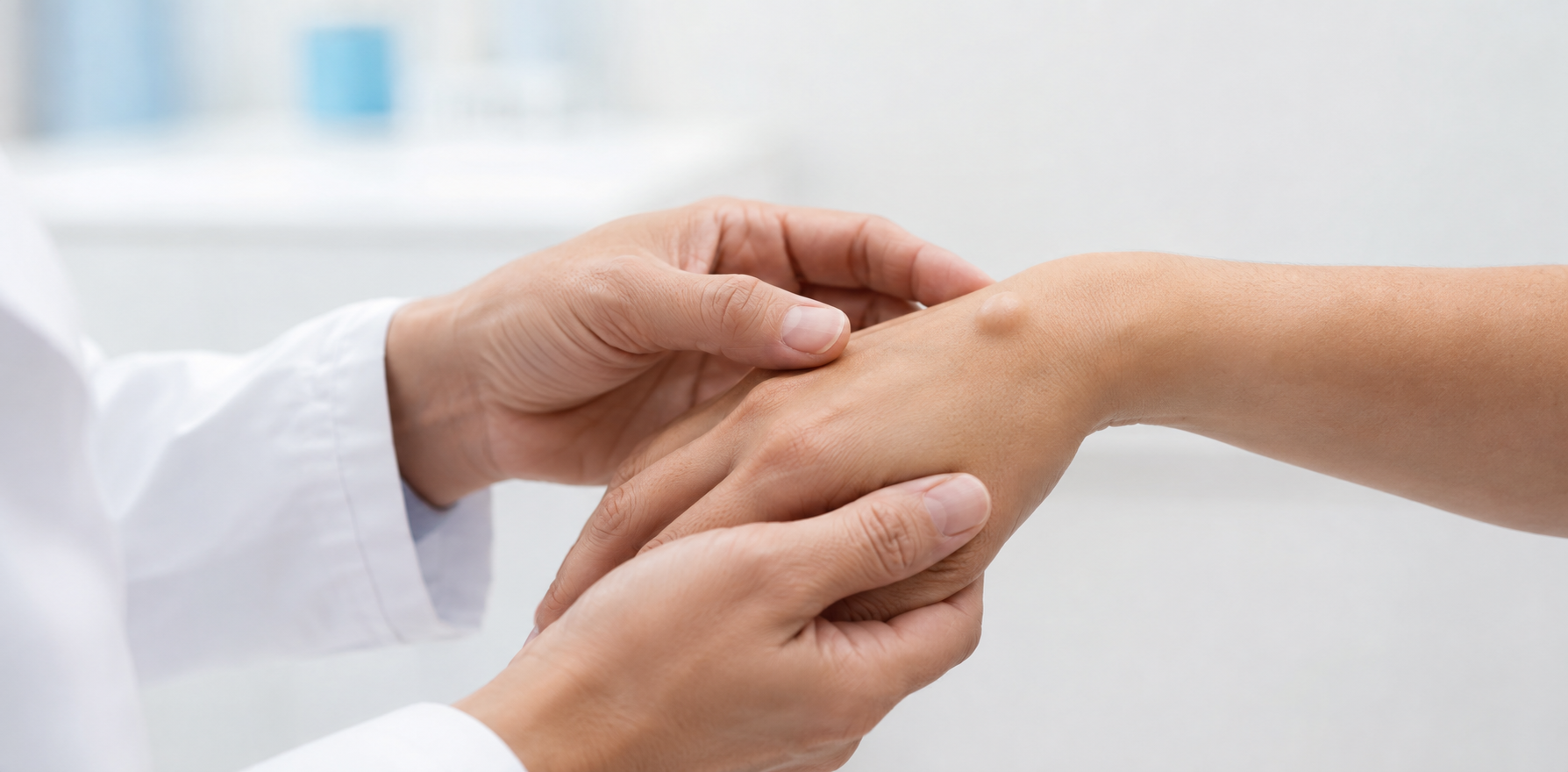
Ganglion cysts are benign (non-cancerous), fluid-filled lumps that most commonly develop on the back of the wrist, although they can also occur on the palm side or around the fingers. They contain a thick, jelly-like fluid and are usually connected to an underlying joint or tendon by a narrow stalk.
These cysts can vary in size and may increase or decrease depending on wrist activity. While often harmless, they can sometimes cause discomfort or interfere with movement if located near nerves or joints.
The exact cause of ganglion cysts is unknown. They can occur at any age but are most commonly seen in individuals between 15 and 40 years old. Ganglia affect men and women equally.
• A visible lump that may fluctuate in size
• One large cyst or multiple smaller cysts
• Aching or discomfort, particularly with wrist movement
• Weakness if the cyst is connected to a tendon
• Occasional pins and needles or nerve-related pain if near a nerve
Many ganglion cysts cause no symptoms at all but may be noticeable or uncomfortable with repeated wrist use.
Diagnosis is usually made through a clinical assessment, including a detailed history and physical examination.
In some cases, additional imaging may be used:
• X-ray – to rule out other causes of pain
• Ultrasound or MRI – if the diagnosis is unclear
In most cases, no treatment is required. Ganglion cysts are harmless and resolve spontaneously in around 60% of patients, although this can take several years.
If treatment is needed, options include:
• Aspiration – draining the fluid using a needle
• Surgical removal – excision of the cyst and its stalk (most effective for preventing recurrence)
Surgical removal is typically performed under anaesthetic as a day-case procedure.
The cyst is removed along with the stalk connecting it to the joint or tendon. Removing the stalk is important to reduce the risk of recurrence, similar to removing the root of a weed.
Procedures can be:
• Open surgery
• Keyhole (arthroscopic) surgery – smaller scars but longer operating time
After surgery:
• A bulky dressing is applied for 48 hours
• A lighter dressing is then used until around 10 days
• Stitches are dissolvable and do not require removal
Return to work:
• Sedentary roles: approximately 2 weeks
• Manual work: up to 6 weeks
Driving:
• Usually safe after 6–7 days
• May take up to 2 weeks for full comfort
Return to sport:
• Most activities: approximately 6 weeks
• High-demand sports: up to 3 months
As with any surgery, there are small risks:
• Infection (around 1%), usually treated with antibiotics
• Swelling and stiffness, which may persist for several months
• Scar sensitivity, particularly in the palm, often improving with massage
• Nerve injury (rare), potentially causing numbness or pain
• Neuroma formation (rare), which may require further treatment
• Recurrence, occurring in up to 10% of cases
• Complex Regional Pain Syndrome (CRPS), a rare condition causing prolonged pain and sensitivity
You should seek medical advice if:
• The lump becomes painful or rapidly increases in size
• You experience weakness, numbness, or tingling
• The cyst interferes with daily activities or function
• You are concerned about the diagnosis




.png)