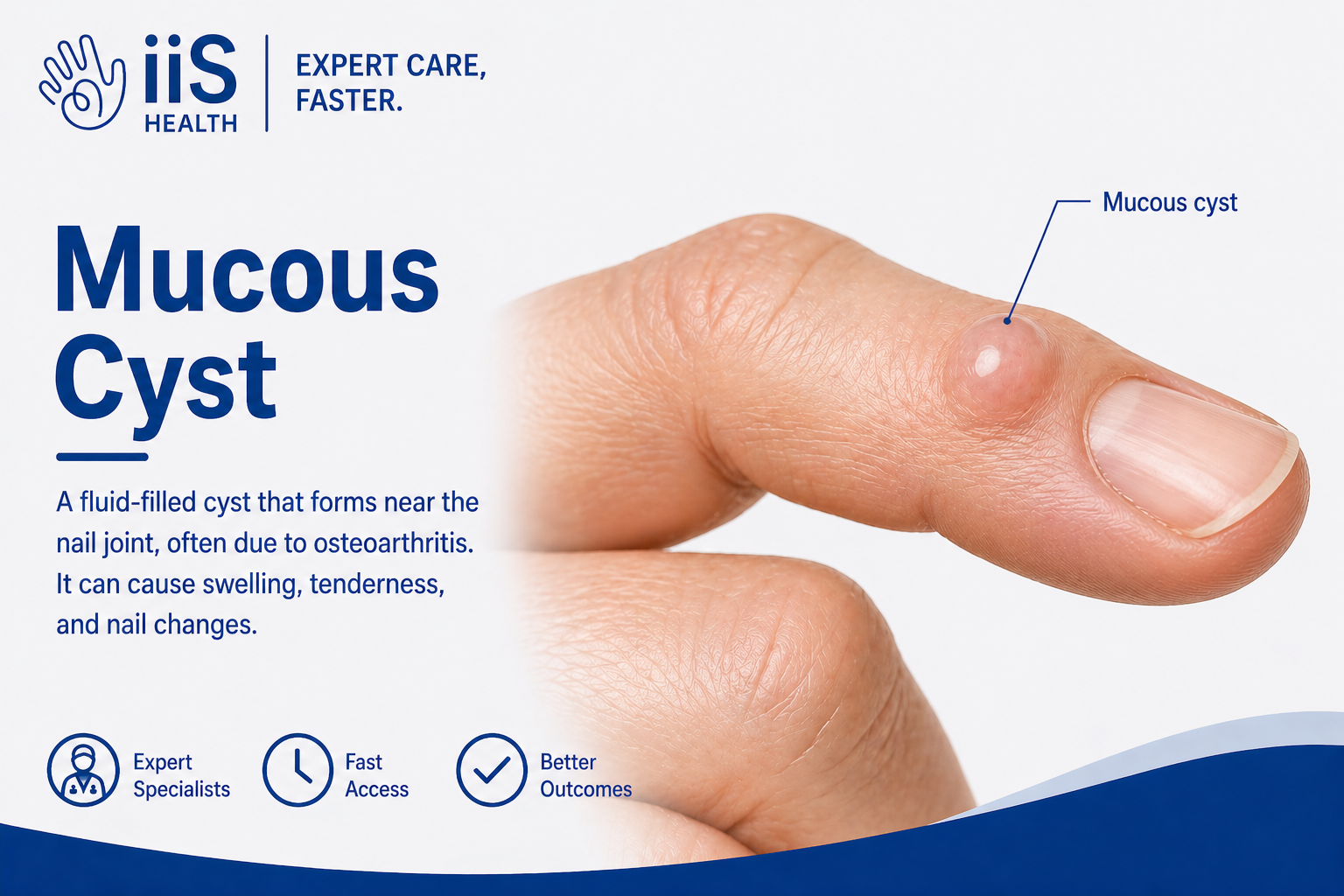
A mucous cyst is a fluid-filled swelling that develops at the end joint of the finger (distal interphalangeal joint).
It arises from the lining of the joint and is often associated with underlying osteoarthritis. These cysts may fluctuate in size and can sometimes resolve spontaneously, although recurrence is common.
They are most commonly found on the back of the finger near the nail.
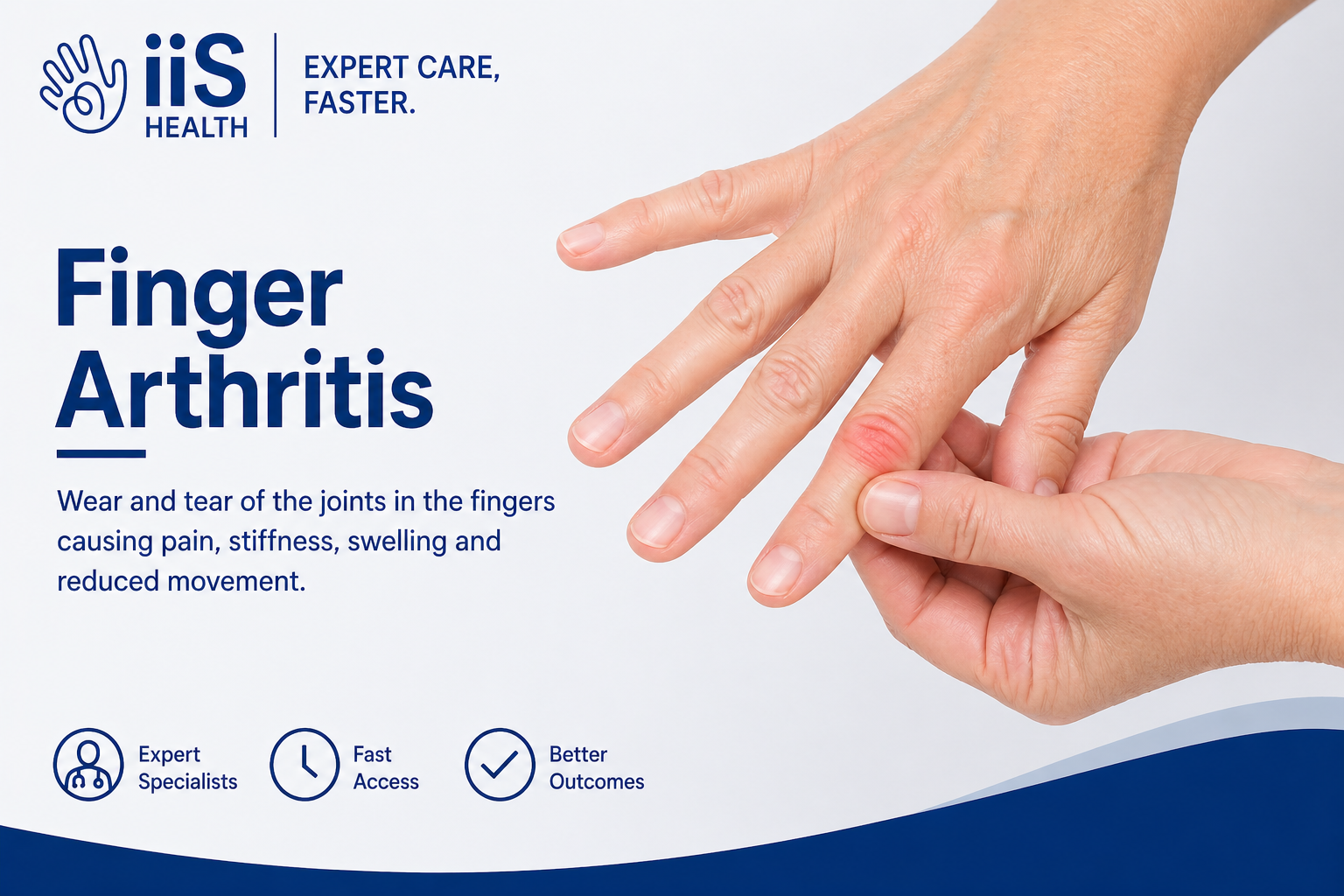
The exact cause is not always clear, but mucous cysts are commonly associated with arthritis in the underlying joint.
Wear and tear within the joint can lead to the formation of extra bone (osteophytes) and increased joint fluid, which may contribute to the development of the cyst.
• A small, raised swelling near the end joint of the finger
• Rounded, fluid-filled appearance
• Nail ridging or deformity
• Occasional discomfort or pain
• Risk of the cyst bursting
The cyst is often painless but may become uncomfortable if irritated or if pressure is applied.
If the cyst bursts, there is a small risk of infection spreading to the joint.
Diagnosis is usually made through a clinical history and examination.
An X-ray is often performed to confirm the presence of arthritis in the underlying joint.
In most cases, no treatment is required as the cyst is benign.
Treatment may be considered if:
• The cyst is painful
• It continues to grow
• It causes nail deformity
• There is a risk of rupture or infection
Surgical removal is the most effective treatment when intervention is required.
Surgical treatment involves removal of the cyst under local anaesthetic as a day-case procedure.
The cyst is removed along with part of the joint lining (capsule) from which it arises.
Any underlying bone spurs (osteophytes) are also removed to reduce the risk of recurrence.
After surgery:
• A bulky dressing is applied for 48 hours
• This is replaced with a lighter dressing until around 10 days
• Stitches are removed at approximately 10 days
Return to work:
• Sedentary roles: approximately 2 weeks
• Manual work: up to 6 weeks
Driving:
• Usually possible after 6–7 days
• Best delayed until stitches are removed
Return to sport:
• Most activities: approximately 6 weeks
• High-demand sports: up to 3 months
As with any surgery, there are potential risks:
• Infection (around 1%), usually treated with antibiotics
• Swelling and stiffness
• Scar sensitivity
Specific risks include:
• Nail bed injury (rare), which may affect nail growth
• Recurrence of the cyst (reduced when osteophytes are removed)
• Complex Regional Pain Syndrome (CRPS), a rare complication causing prolonged pain and sensitivity
You should seek medical advice if:
• The cyst becomes painful or increases in size
• It affects the appearance of the nail
• It bursts or shows signs of infection
• It interferes with daily activities
Early assessment can help reduce complications.




.png)