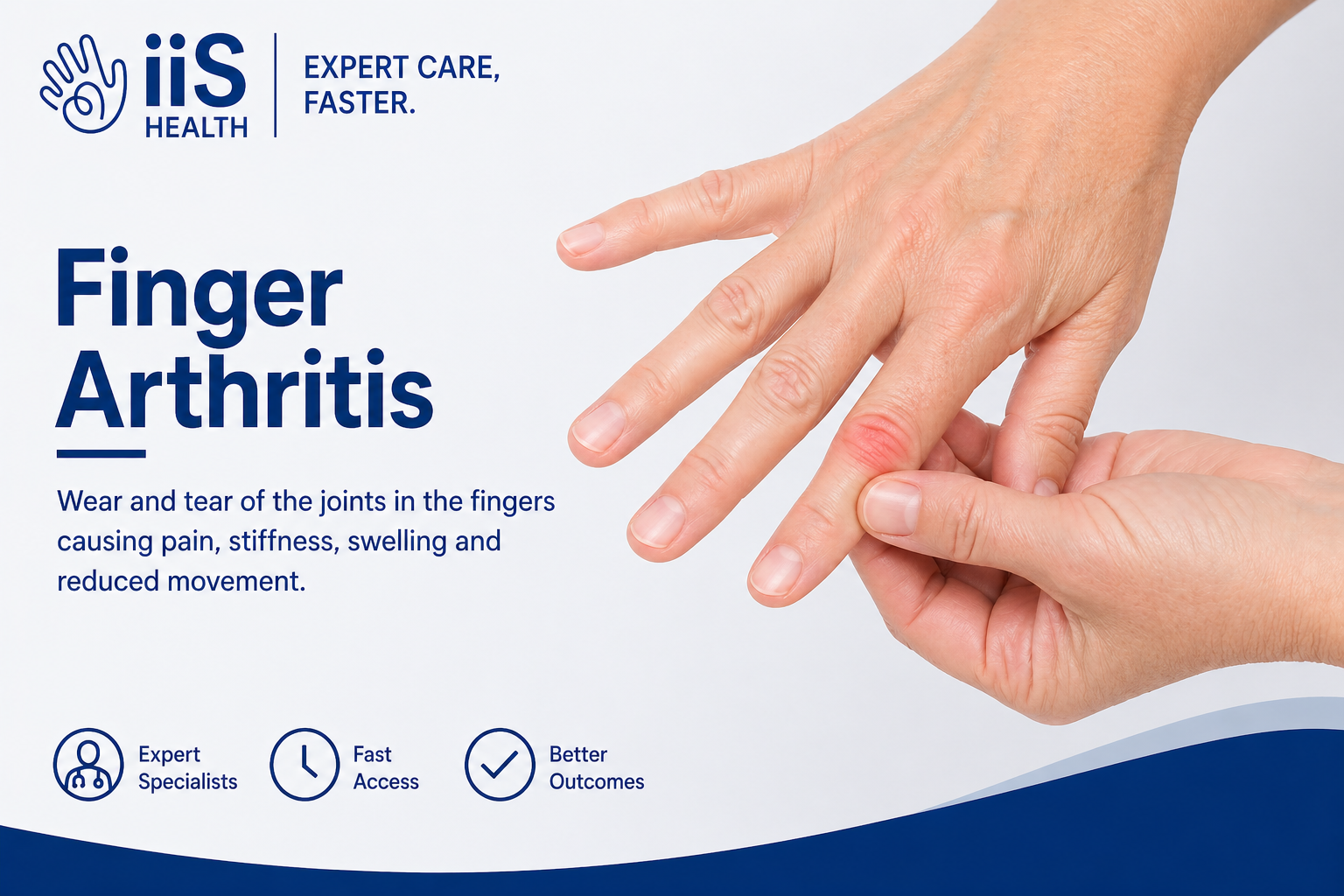
Finger joint arthritis is a common condition affecting the small joints of the hand, leading to pain, stiffness, and reduced function.
There are two main types of arthritis affecting the hand:
Osteoarthritis is a wear-and-tear condition where the cartilage lining the joint surfaces gradually wears away, exposing the underlying bone and causing pain.
Inflammatory arthritis occurs when the body’s immune system mistakenly attacks the joint structures, leading to inflammation, joint damage, and loss of function.
Osteoarthritis most commonly affects the end joints of the fingers (distal interphalangeal joints), while inflammatory arthritis more often affects the knuckles (metacarpophalangeal joints) and middle finger joints (proximal interphalangeal joints).
There are two principal types of arthritis affecting the fingers:
• Osteoarthritis – caused by gradual wear and tear of the joint cartilage over time
• Inflammatory arthritis – caused by the immune system attacking the joint structures
Risk factors include:
• Increasing age
• Previous joint injury
• Repetitive use of the hands
• Underlying inflammatory conditions such as rheumatoid arthritis
• Pain in the finger joints
• Swelling and tenderness
• Joint stiffness, particularly in the morning
• Warmth around the joints
• Grinding or clicking sensation
Pain is the primary symptom and may worsen with activity.
Over time, joints may become stiff and deformed, particularly in inflammatory arthritis, leading to reduced hand function.
Diagnosis is made through a detailed history and examination.
Investigations may include:
• X-rays of the hand and wrist to assess joint changes
• Blood tests if inflammatory arthritis is suspected
Most patients are initially managed without surgery.
Non-surgical treatment includes:
• Pain relief medication
• Splints to support affected joints
• Activity modification
• Steroid injections into affected joints
For inflammatory arthritis:
• Specialist medication prescribed by a rheumatologist to control the underlying disease
Surgery is considered when pain persists or function becomes significantly impaired.
There are three main surgical options for treating arthritis in the finger joints:
• Joint fusion (arthrodesis) – the joint is permanently fixed to eliminate movement and pain
• Joint replacement (arthroplasty) – the damaged joint is replaced with an artificial implant to preserve movement
• Resection arthroplasty – part of the joint surface is removed to prevent painful contact
The choice of procedure depends on the joint involved, functional requirements, and patient factors.
After surgery:
• A bulky dressing is applied for 48 hours
• This is replaced with a lighter dressing until around 10 days
• Stitches are removed at approximately 10 days
Return to work:
• Sedentary roles: approximately 2 weeks
• Light manual work: approximately 4 weeks
• Heavy manual work: up to 6 weeks
Driving:
• Usually possible after 6–7 days
• Best delayed until stitches are removed
Return to sport:
• Most activities: approximately 6 weeks
• High-demand sports: up to 3 months
As with any surgery, there are potential risks:
• Infection (around 1%), usually treated with antibiotics
• Swelling and stiffness, which may persist for several months
• Scar sensitivity
• Nerve irritation or injury (rare)
Additional considerations:
• Reduced joint movement depending on procedure
• Recurrence or progression of arthritis in other joints
• Residual stiffness or discomfort
• Complex Regional Pain Syndrome (CRPS), a rare complication causing prolonged pain and sensitivity
You should seek medical advice if:
• You have persistent pain or swelling in the finger joints
• Stiffness is affecting your daily activities
• You notice joint deformity
• Symptoms are worsening over time
Early diagnosis can help manage symptoms and slow progression.




.png)