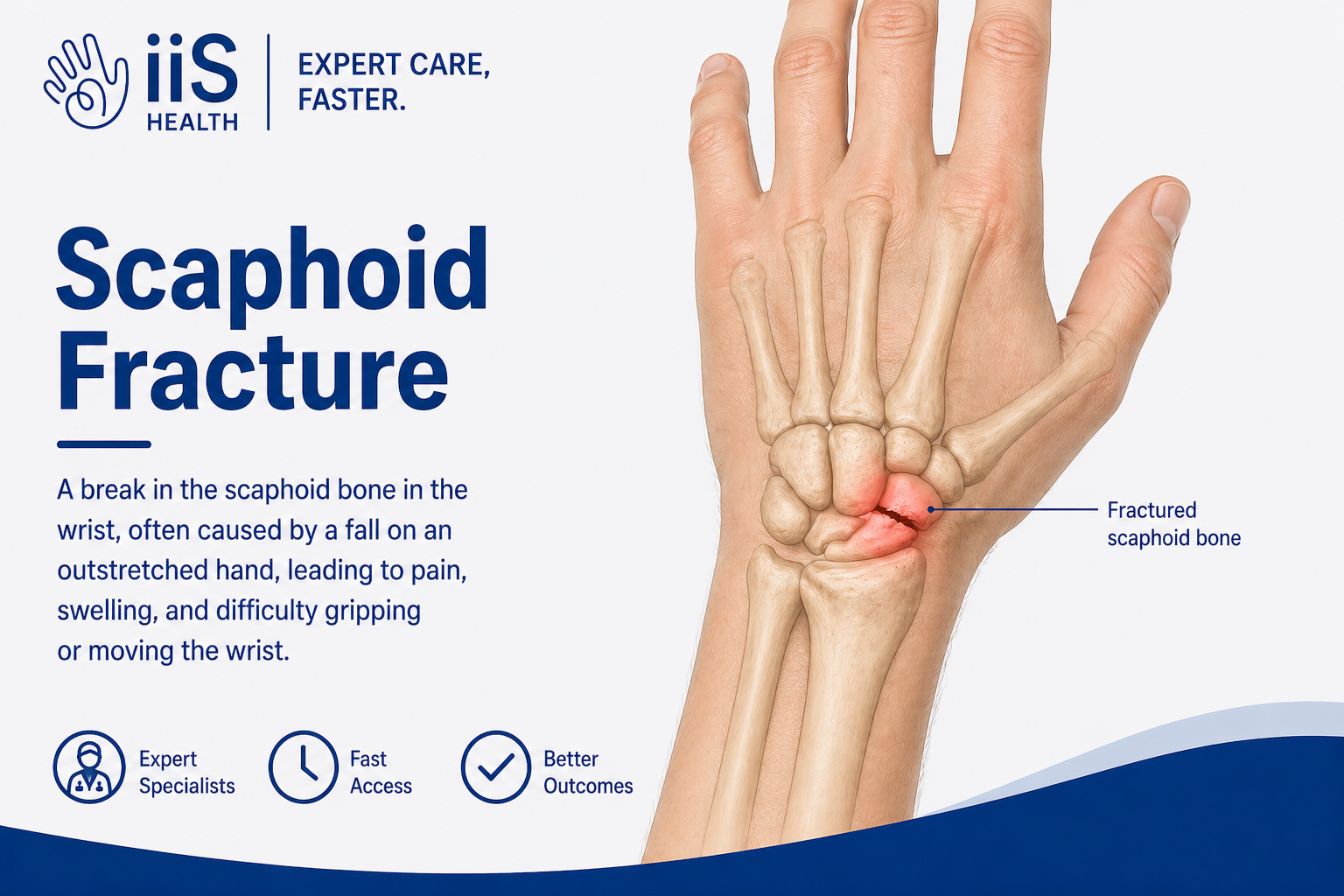
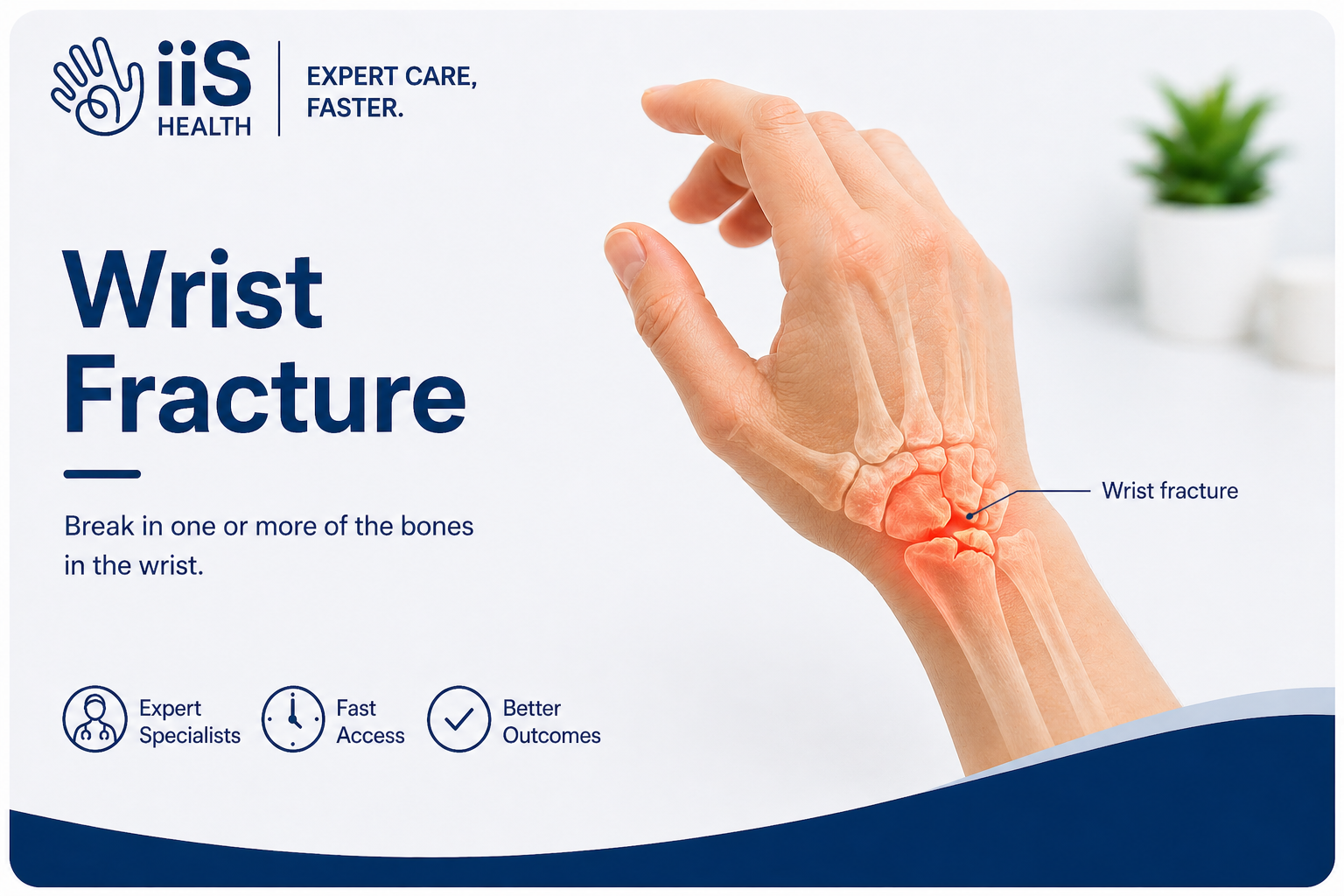
A scaphoid fracture is a break in one of the small bones in the wrist, located on the thumb side. The scaphoid plays a key role in wrist movement and stability and is the most commonly fractured carpal bone.
These injuries typically occur after a fall onto an outstretched hand. Some fractures can be difficult to detect initially, and early diagnosis is important to ensure proper healing.
If left untreated, scaphoid fractures can lead to long-term problems including nonunion and wrist arthritis.
Scaphoid fractures are most commonly caused by:
• Pain on the thumb side of the wrist
• Swelling and tenderness
• Reduced range of motion
• Pain when bending the wrist backwards
• Bruising or discoloration
Pain in the anatomical snuffbox (the hollow at the base of the thumb) is a key clinical sign.
Symptoms may be mild initially, which can delay diagnosis.
Diagnosis can be challenging in the early stages.
• Clinical history and examination often raise suspicion
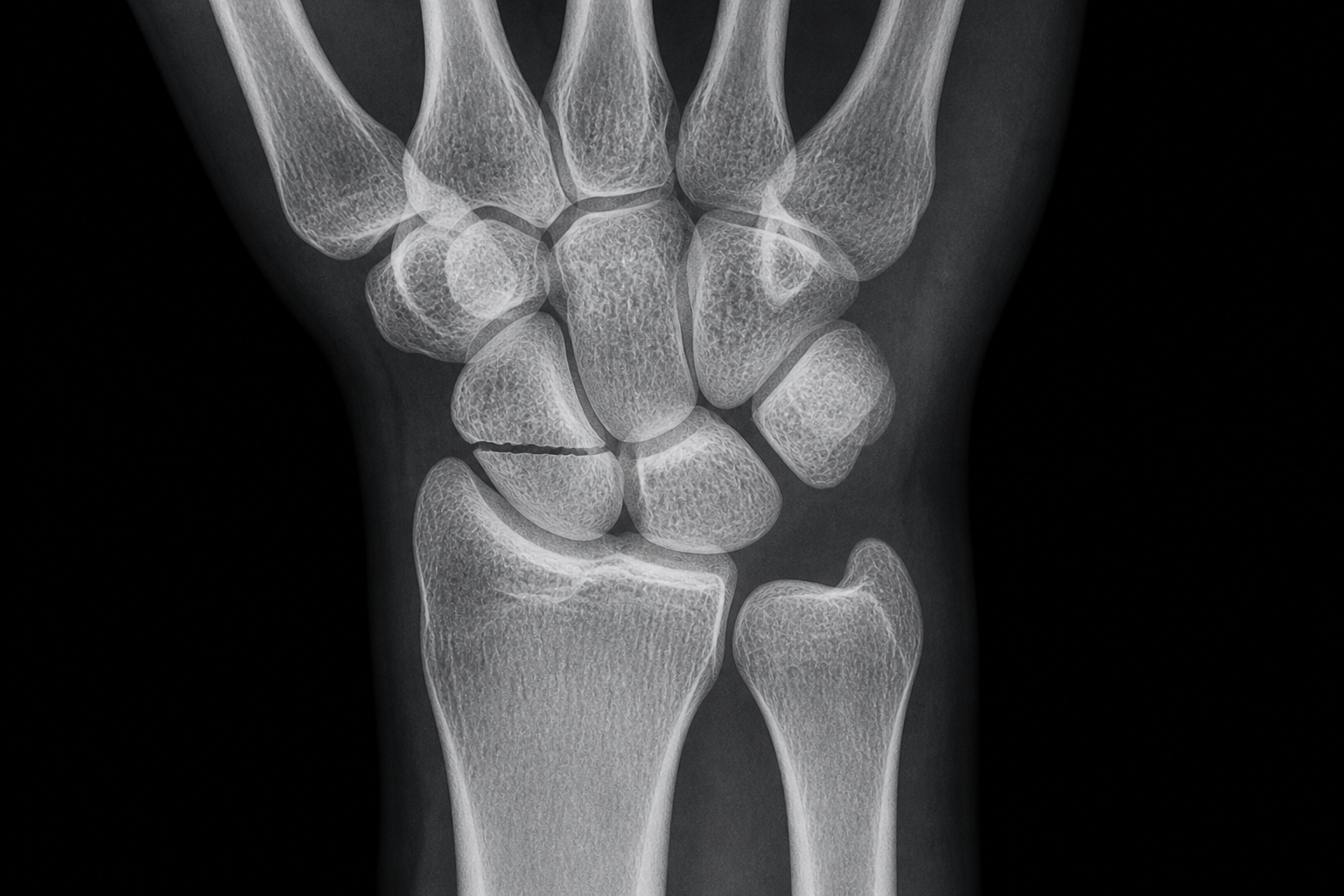
• X-rays are required but may not show the fracture immediately
• Repeat X-rays after 10–14 days may reveal the fracture more clearly
In some cases:
• MRI scan is used to confirm the diagnosis when X-rays are inconclusive
Treatment depends on several factors:
• Timing of diagnosis
• Degree of fracture displacement
• Location of the fracture within the scaphoid
• Associated injuries
Non-surgical treatment:
• Undisplaced fractures can often be treated in a cast for 6–10 weeks
Surgical treatment:
• Displaced fractures or those at higher risk of non-union often require surgery
Fractures closer to the wrist joint (proximal pole) have a poorer blood supply and are less likely to heal without surgery.
Surgical treatment typically involves fixation of the fracture using a screw placed through the centre of the scaphoid.
This is usually performed under general anaesthetic as a day-case procedure.
• Early fractures may be treated with a minimally invasive (percutaneous) approach
• Delayed or complex fractures may require an open procedure
In some cases:
• Bone grafting is required to support healing
• Grafts may be taken from the radius
• Either non-vascularised or vascularised grafts may be used depending on the situation
After treatment:
• Immobilisation in a cast or splint is required
• This is typically for a minimum of 4 weeks
• May be followed by a removable splint and rehabilitation exercises
Return to work:
• Depends on treatment and job requirements
Driving:
• Only possible once out of cast
• May take additional time to regain comfort and control
Rehabilitation:
• Physiotherapy is important to restore movement and strength
As with any injury or surgery, there are potential risks:
• Infection (around 1%), usually treated with antibiotics
• Swelling and stiffness
• Delayed healing or non-union (10–15% risk, higher in proximal fractures)
• Scar sensitivity
• Nerve irritation or injury (rare)
Additional considerations:
• Poor healing due to limited blood supply
• Long-term wrist stiffness
• Risk of arthritis if untreated
• Complex Regional Pain Syndrome (CRPS), a rare complication causing prolonged pain and sensitivity
You should seek medical attention if:
• You have wrist pain following a fall
• Pain persists despite normal X-rays
• You experience tenderness on the thumb side of the wrist
• Movement of the wrist is painful or limited
Early diagnosis is important to ensure proper healing and avoid complications.




.png)