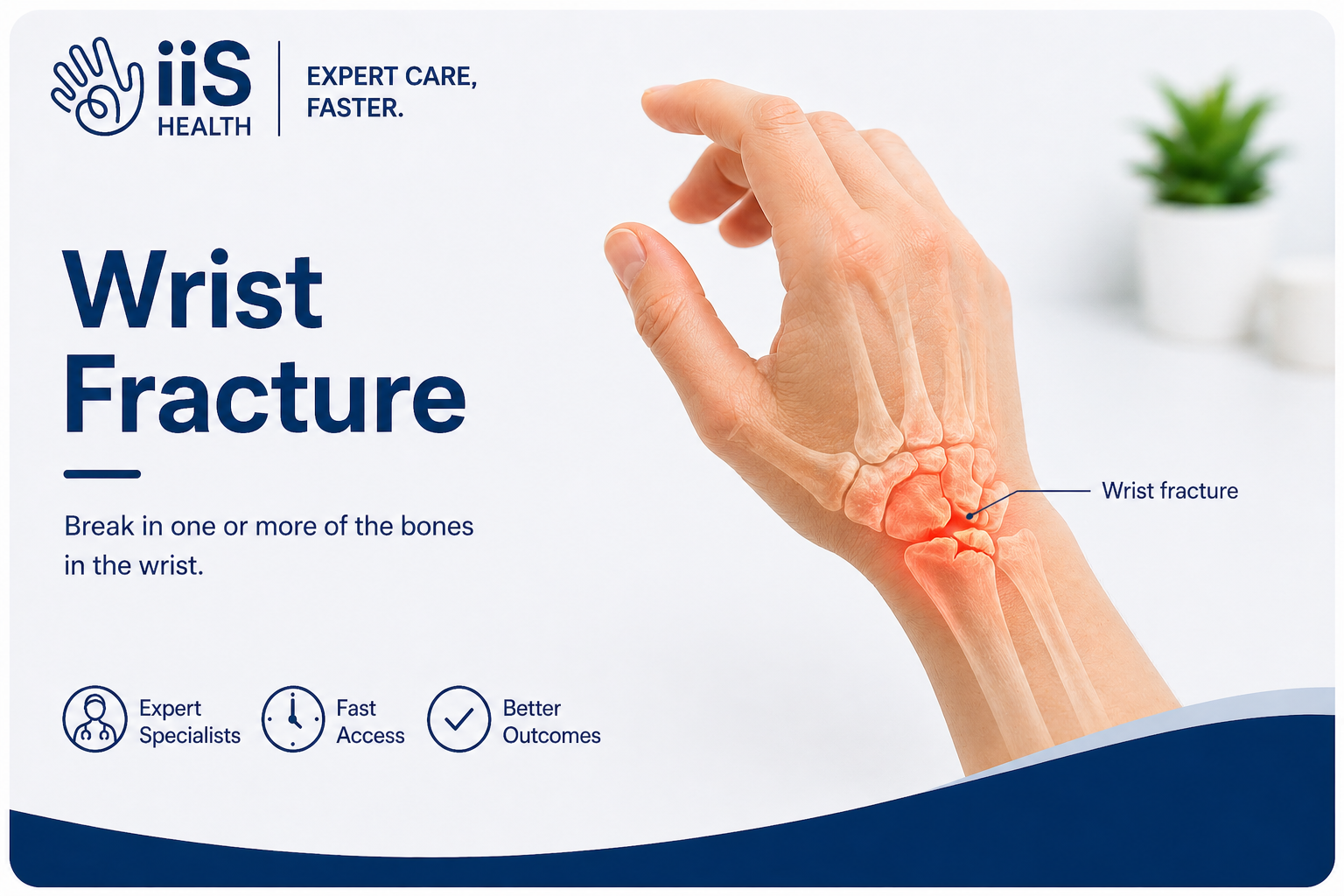
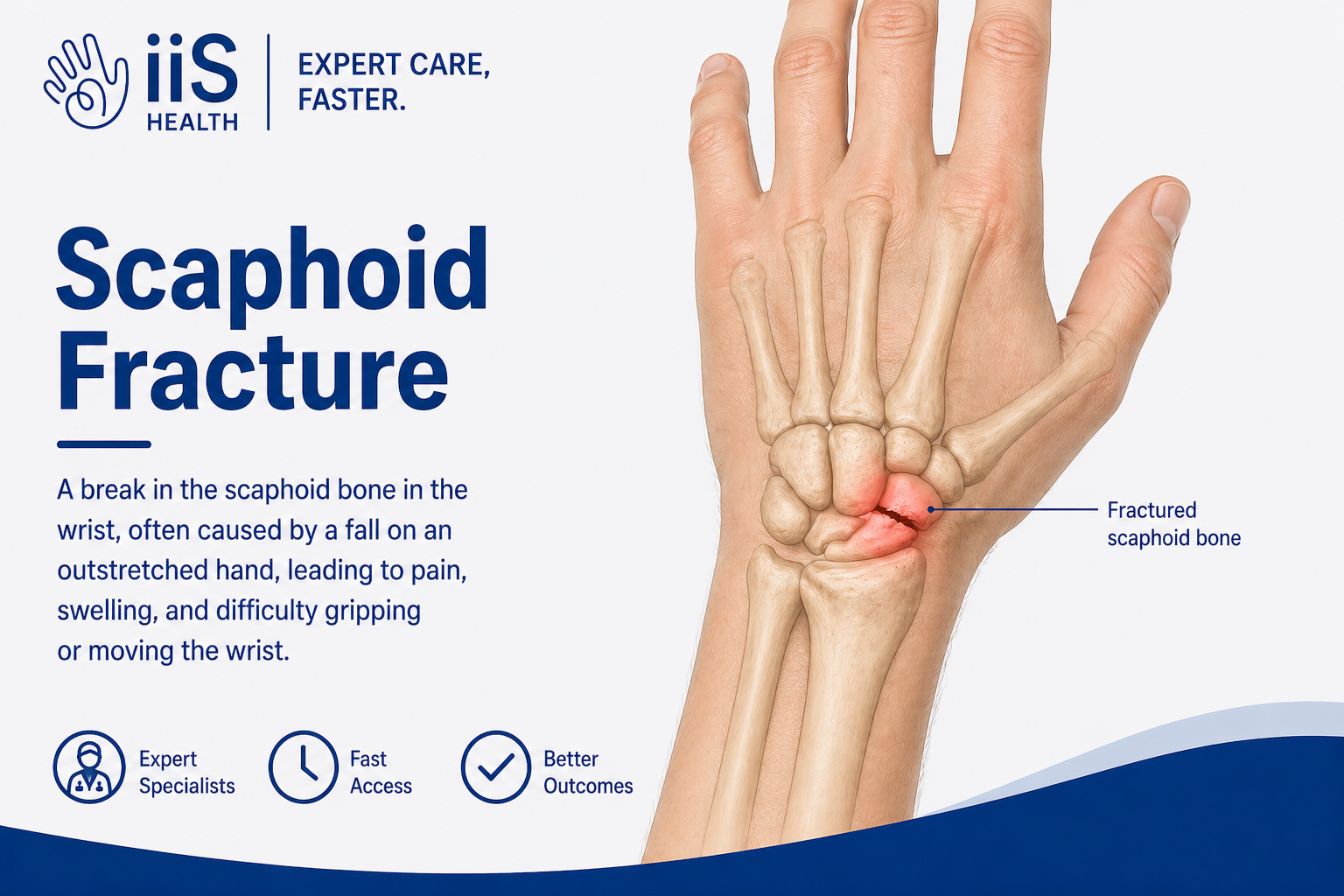
The wrist is made up of eight small bones that connect with the two forearm bones, the radius and the ulna.
A “wrist fracture” most commonly refers to a break in one or both of the forearm bones near the wrist, particularly the radius.
These injuries are very common and can vary from simple fractures that heal in a cast to more complex injuries requiring surgical treatment.
Wrist fractures most commonly occur as a result of a fall onto an outstretched hand.
They are frequently seen in:
• Children and young adults following sporting injuries
• Road traffic accidents
• Older patients, where fractures may indicate underlying bone weakening (osteoporosis)
• Severe pain around the wrist
• Swelling and tenderness
• Bruising
• Difficulty moving the wrist or gripping objects
• Visible deformity in more severe cases
Pain is usually the main symptom. In some cases, the wrist may appear bent or misshapen.
Pins and needles in the fingers can occur if swelling or deformity places pressure on the median nerve.
Diagnosis is often suggested by the history and physical examination.
An X-ray is required to confirm the fracture.
In more complex cases:
• CT scans may be used to better understand the fracture pattern
• MRI scans may be required to assess associated ligament injuries
Treatment depends on several factors, including the type of fracture and patient characteristics.
Key considerations include:
• How much the fracture has moved (displacement)
• Whether the fracture involves the joint
• The number of fracture fragments
• Associated injuries
Non-surgical treatment:
• Undisplaced fractures can often be treated with immobilisation in a plaster cast for approximately 6 weeks
Surgical treatment:
• Displaced or unstable fractures often require surgery to restore alignment and function
The type of surgery depends on the fracture pattern and complexity.
Common techniques include:
• K-wire fixation – used for simpler fractures, where wires are inserted to hold the bone in position
• Plate and screw fixation – used for more complex fractures to stabilise the bone fragments
• External fixation – used in more severe injuries, where a frame is applied outside the body to support the wrist
Surgery is usually performed under general anaesthetic and is typically a day-case procedure.
Recovery depends on the type of fracture and treatment used.
For K-wire fixation:
• Immobilisation in a plaster cast for approximately 6 weeks
• Early follow-up to check wounds and change dressings
For plate fixation:
• Bulky dressing for around 2 weeks
• Early physiotherapy from 2 weeks
• Occasionally additional immobilisation for 2–4 weeks
Return to work:
• Varies depending on job and treatment
Driving:
• Usually only possible once out of plaster
• May take a further couple of weeks to regain comfort and control
Rehabilitation:
• Physiotherapy is important to restore movement, strength, and function
As with any surgery or injury, there are potential risks:
• Infection (around 1%), usually treated with antibiotics
• Swelling and stiffness, which may persist for several months
• Delayed healing or non-union of the fracture
• Scar sensitivity
• Nerve irritation or injury (rare)
Additional considerations:
• Risk of developing arthritis if the joint surface is involved
• Complex Regional Pain Syndrome (CRPS), a rare complication causing prolonged pain and sensitivity
You should seek medical attention if:
• You experience significant pain following a fall or injury
• The wrist is swollen, bruised, or deformed
• You are unable to move your wrist or grip objects
• You notice numbness or tingling in the fingers
Prompt assessment and treatment improve outcomes.




.png)