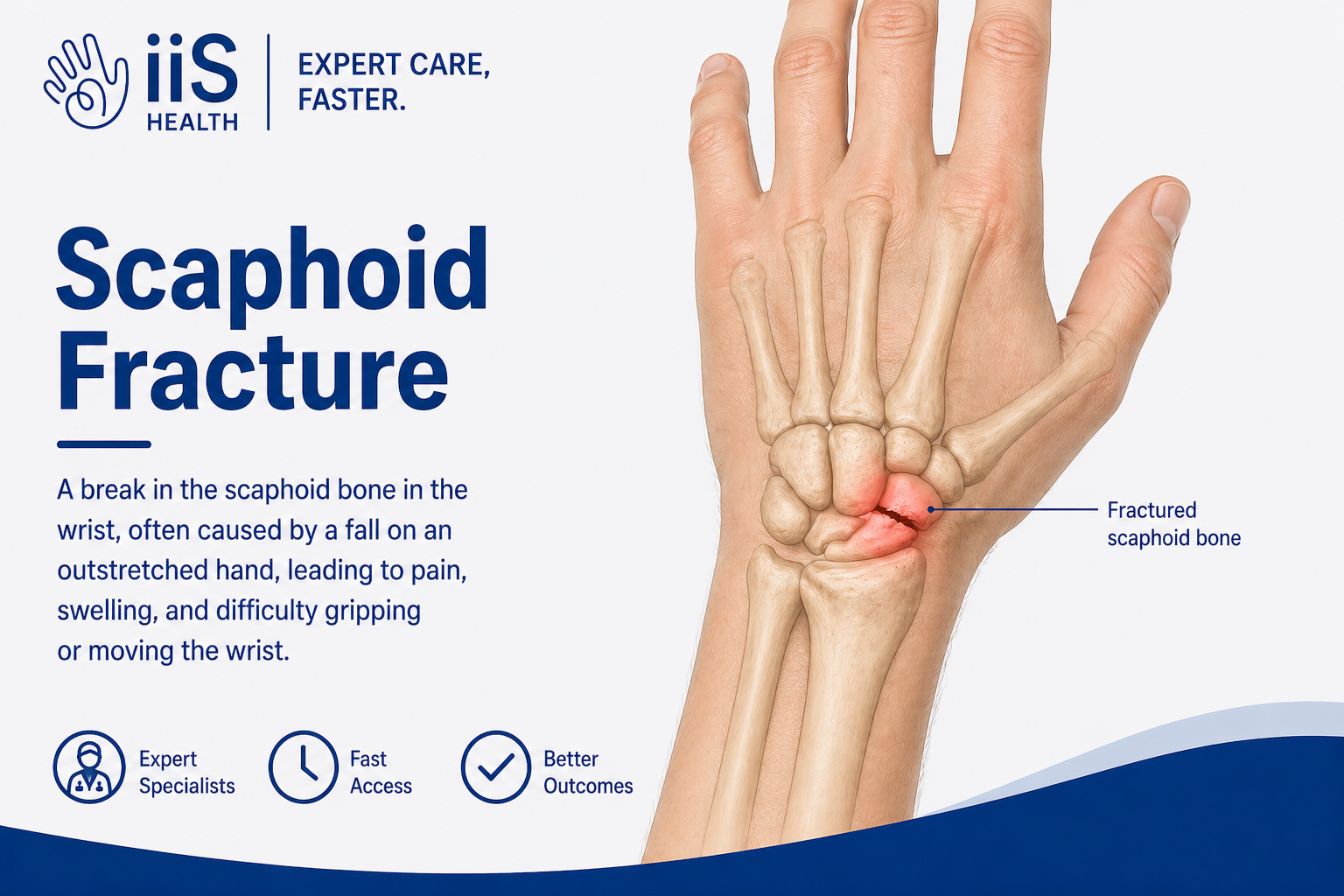
SNAC wrist (Scaphoid Nonunion Advanced Collapse) is a pattern of wrist arthritis that develops when a scaphoid fracture fails to heal properly.
The scaphoid plays a key role in stabilising the wrist. When it does not unite after a fracture, abnormal motion occurs between the wrist bones. Over time, this leads to uneven loading and progressive wear of the joint surfaces.
SNAC wrist follows a predictable pattern of joint degeneration, typically beginning between the scaphoid and radius before progressing to involve other parts of the wrist.
Symptoms often develop gradually and may worsen over months or years following the original injury.
Early diagnosis and appropriate management can help slow progression and preserve wrist function.
SNAC wrist develops as a result of a scaphoid fracture that has not healed (nonunion).
Contributing factors include:
These factors prevent the fracture from healing, leading to abnormal wrist mechanics and progressive joint degeneration.
Symptoms may include:
Symptoms typically worsen with activity and may become more constant as arthritis progresses.
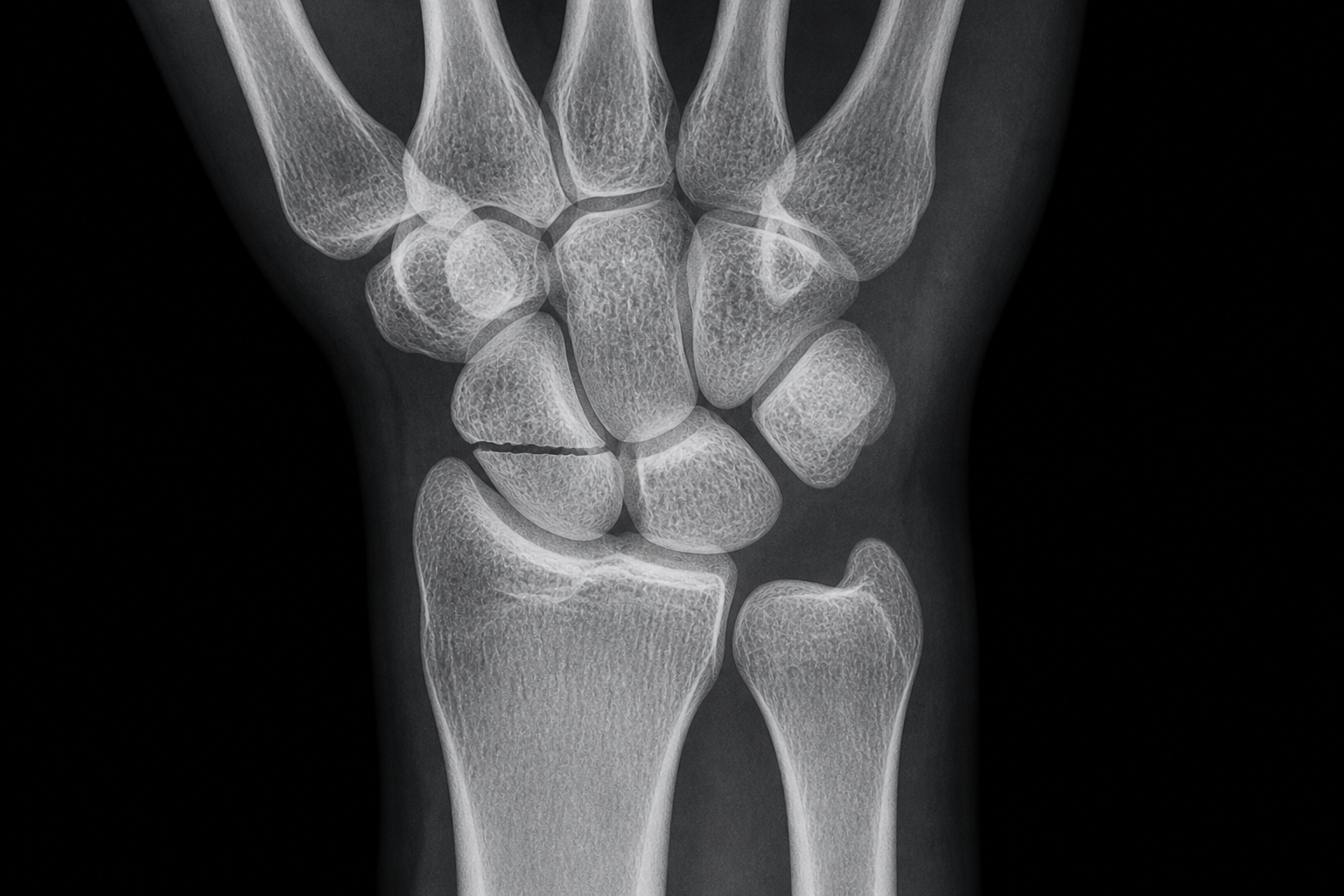
Diagnosis is based on clinical assessment and imaging.
Investigations may include:
These investigations help determine the stage of the condition and guide treatment decisions.
Treatment depends on the stage of arthritis and the severity of symptoms.
The aim of treatment is to relieve pain, improve function, and slow progression of arthritis.
Surgical treatment is tailored to the stage of the condition and patient needs.
In earlier cases, surgery may aim to restore scaphoid healing. In more advanced stages, procedures focus on relieving pain and improving function by addressing arthritic changes.
Surgery is typically performed as a planned procedure, often under regional or general anaesthetic.
Recovery depends on the type of treatment performed.
Recovery may include:
Improvement in pain and function is expected over time, although full recovery may take several months.
As with any surgical procedure, there are potential risks, although these are uncommon.
Possible complications include:
Your surgeon will discuss the specific risks and expected outcomes based on the procedure recommended.
You should seek medical advice if you have persistent wrist pain following a previous injury, particularly if symptoms have gradually worsened over time.
Early assessment is important, as untreated scaphoid fractures can lead to long-term joint damage and reduced function.




.png)